
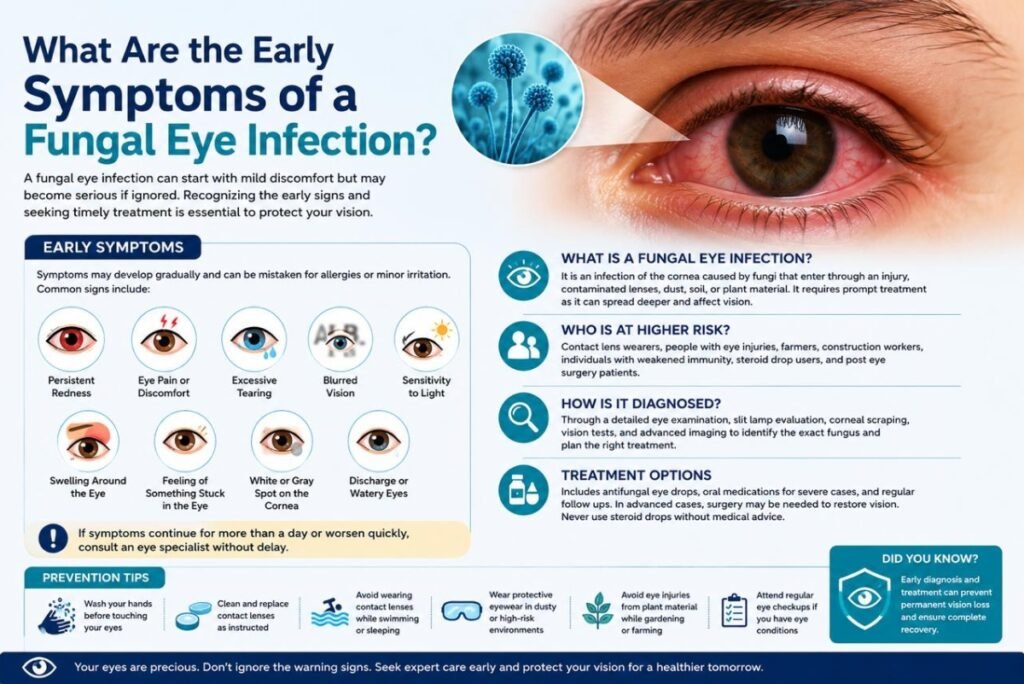
What Are the Early Symptoms of a Fungal Eye Infection?
Introduction
Healthy eyes are essential for everyday life, but infections can sometimes develop without obvious warning signs. Among them, a fungal eye infection is uncommon but can become a serious condition if not treated promptly.
Many people mistake the early symptoms for allergies or a minor eye irritation, which delays proper treatment. If you experience persistent redness, pain, blurred vision, or discomfort, it is important to seek medical attention immediately. Choosing the best eye hospital in Ahmedabad ensures you receive an accurate diagnosis and advanced treatment from experienced specialists like Dr. Rushil Ambani, helping protect your vision before the infection becomes severe.
What Is a Fungal Eye Infection?
A fungal eye infection is an infection of the eye caused by fungi that enter the cornea through an injury, contaminated contact lenses, plant material, or exposure to dust and soil. This condition is medically known as fungal keratitis and requires immediate medical attention because fungi can spread deeper into the cornea if left untreated.
Although fungal infections are less common than bacterial or viral infections, they are often more difficult to treat. Early diagnosis significantly improves the chances of complete recovery and helps prevent permanent vision loss
What Are the Early Symptoms of a Fungal Eye Infection?
The symptoms may develop gradually and can easily be mistaken for other eye conditions. Recognizing the warning signs early is the key to protecting your eyesight.
Some of the most common fungal eye infection symptoms include persistent eye redness, moderate to severe eye pain, excessive tearing, blurred vision, sensitivity to light, swelling around the eye, and the feeling that something is stuck inside your eye.
Some patients also notice a white or gray spot on the cornea, which should never be ignored. If these symptoms continue for more than a day or worsen quickly, consult an eye specialist without delay.
Can a Cold Cause Eye Pain?
Many people experience common cold eye pain while suffering from a viral infection. Sinus congestion and inflammation can create pressure around the eyes, making them feel sore or heavy.
Similarly, eye pain due to cold is usually temporary and improves as the cold resolves. However, if the pain is severe, is associated with redness, blurred vision, or discharge, it may indicate a different problem such as a fungal or bacterial infection rather than a simple cold.
A proper eye examination is the only way to identify the exact cause.
Who Is at Higher Risk?
Certain individuals have a greater chance of developing a fungal eye infection. These include people who wear contact lenses for long hours, individuals with eye injuries caused by farming or gardening, construction workers exposed to dust, people with weakened immunity, and those using steroid eye drops without medical advice.
Patients who have recently undergone eye surgery should also be cautious and report any unusual symptoms immediately.
If you are considering vision correction procedures, choosing the best lasik eye surgery in Ahmedabad ensures your eyes are carefully evaluated before treatment, reducing the risk of complications and maintaining overall eye health.
How Is a Fungal Eye Infection Diagnosed?
Diagnosis begins with a detailed eye examination by an experienced ophthalmologist.
Dr. Rushil Ambani carefully evaluates the cornea using advanced diagnostic equipment and may recommend laboratory testing if required.
Diagnostic procedures may include a slit lamp examination, corneal scraping, vision assessment, and specialized imaging.
Identifying the exact fungus helps determine the most effective treatment plan.
What Is the Treatment for a Fungal Eye Infection?
Early fungal eye infection treatment is essential because delayed treatment can permanently affect vision.
Treatment usually includes prescription antifungal eye drops, oral antifungal medications in severe cases, and regular follow up examinations to monitor healing.
Patients should never use over the counter steroid eye drops without medical advice, as they may worsen the infection. In advanced situations where the cornea is severely damaged, surgery may be necessary to restore vision.
Can Fungus Affect the Skin Around the Eyes?
Yes. In some cases, a fungal infection around eyes may affect the skin surrounding the eyelids rather than the eye itself.
Symptoms may include redness, itching, flaky skin, swelling, or irritation around the eyelids. Although this condition is different from fungal keratitis, both require medical evaluation because the infection can spread if ignored.
How Can You Prevent a Fungal Eye Infection?
- Simple precautions can greatly reduce your risk.
- Always wash your hands before touching your eyes. Clean and replace contact lenses as instructed.
- Avoid wearing contact lenses while swimming or sleeping.
- Wear protective eyewear while gardening, farming, or working in dusty environments.
- Never ignore an eye injury caused by plant material because it increases the risk of fungus in eye infections.
- Attend regular eye checkups if you wear contact lenses or have underlying eye conditions.
Conclusion
A fungal eye infection should never be ignored, even if the symptoms seem mild at first. Early signs such as persistent redness, eye pain, blurred vision, excessive tearing, and sensitivity to light can quickly worsen if left untreated. Seeking timely medical care can help prevent serious complications and protect your long term vision. If you notice any unusual changes in your eyes, consult Dr. Rushil Ambani for a thorough eye examination and personalized treatment. With advanced diagnostic
technology, expert care, and a patient focused approach, choosing the best eye hospital in Ahmedabad ensures you receive the right treatment at the right time, helping you maintain healthy vision and overall eye wellness.