
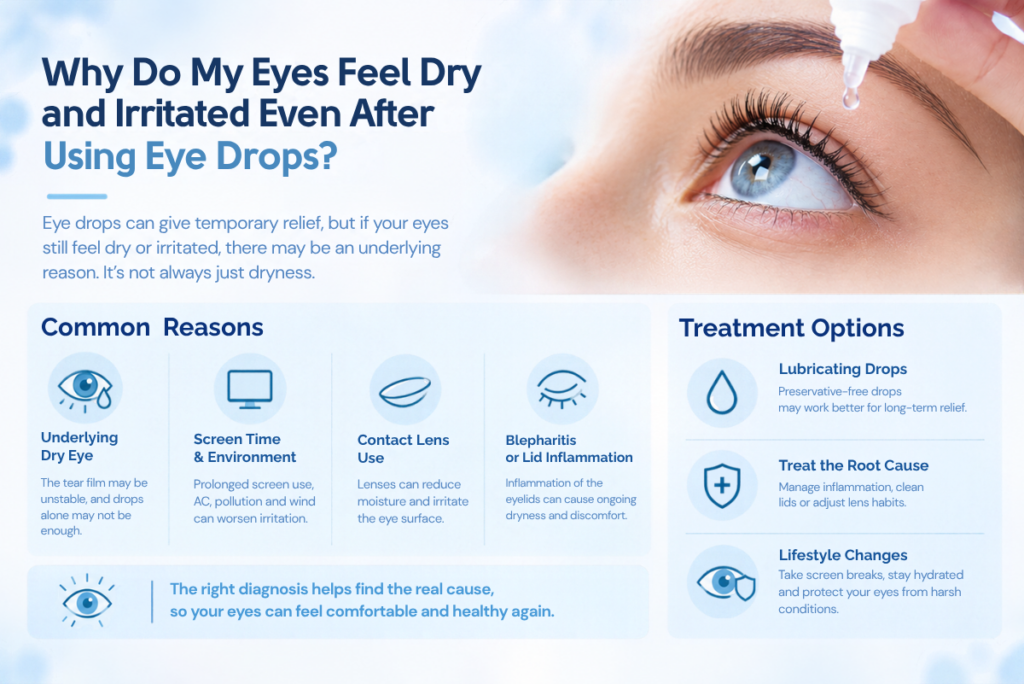
Why Do My Eyes Feel Dry and Irritated Even After Using Eye Drops?
Introduction
You wake up, your eyes feel gritty, and you reach for the eye drops. They help for a little while, and then the itch, burn, or scratchy feeling creeps back. Sound familiar?
If so, you’re far from alone. Dry eyes are one of the most common complaints we hear from people across Ahmedabad, from office workers staring at screens to auto drivers dealing with dust and wind. The frustrating part is that drops sometimes don’t fix it. Let’s look at why.
First, What Exactly Are Dry Eyes?
Your eyes stay comfortable because of a thin layer of tears that spreads over the surface with every blink. That tear layer has three parts: water, a little oil, and a bit of mucus. When there isn’t enough tear, or the tear is poor in quality, the surface dries out and gets irritated.
Think of it like a windshield wiper with no fluid. The wiper is there, but it just scrapes.
Common Signs of Dry Eyes
- Gritty or sandy feeling: As if something is stuck in your eye.
- Burning or stinging: Often worse by evening or after screen time.
- Redness: Usually mild but persistent.
- Watery eyes: Surprising, but true. Dry eyes can trigger a flood of watery tears that don’t actually protect the surface.
- Blurry vision that clears with blinking: A classic clue.
- Tired, heavy eyelids: Especially late in the day.
Why Eye Drops Alone May Not Be Enough
Here’s where many people get stuck. Drops treat the symptom, but the cause often sits somewhere else.
- The real cause isn’t being treated: Dry eyes aren’t always about low water. Many cases come from blocked oil glands along the eyelid edge. Without enough oil, tears evaporate quickly, so plain drops wash out fast.
- Wrong type of drop: A lubricating drop, an allergy drop, and a “redness-relief” drop do very different jobs. Redness-relief drops can actually make dryness worse with regular use.
- Preservatives: Some bottles contain preservatives that can irritate the eye if used many times a day. Preservative-free options are often gentler for frequent use.
- Using them too little or too much: Sporadic use gives short relief. Overuse can wash away your natural tears.
- An underlying condition: Eyelid inflammation, allergies, some autoimmune problems, and certain medicines (including a few for allergies, blood pressure, or depression) can all dry out the eyes.
Everyday Habits That Quietly Make Dryness Worse
Long hours on a phone or laptop are a big culprit. When we stare at a screen, we blink far less, sometimes half as often, which means tears don’t spread properly across the eye. Air conditioning and fans add to the problem by pulling moisture off the eye’s surface, especially when the air blows straight at your face.
Dust, smoke, and pollution from city traffic can irritate the eyes further, and dry, windy weather only adds to it. If you wear contact lenses, they can soak up tear moisture, so wearing them for too long tends to make dryness worse.
Even basics like not drinking enough water or not getting enough sleep can leave your eyes feeling parched and tired.
What You Can Try at Home
- Follow the 20-20-20 rule. Every 20 minutes, look at something 20 feet away for 20 seconds, and blink fully.
- Use a warm compress. A clean, warm cloth over closed eyes for a few minutes can help loosen blocked oil glands.
- Keep fans and AC vents pointed away from your face.
- Wear wraparound sunglasses outdoors to shield your eyes from wind and dust.
- Drink enough water throughout the day.
- Keep screens slightly below eye level, so your eyes open a little less.
When It's Time to Visit an Eye Hospital
Home care can ease mild dry eyes, but some signs mean it’s time for a proper check-up at an eye hospital. These include dryness that lasts more than a couple of weeks despite using drops, eye pain, strong redness, sensitivity to light, or vision that seems to be getting worse. Discharge, swollen eyelids, or dry eyes along with a dry mouth or joint pain are also good reasons to get seen.
Long-term dryness that goes untreated can irritate or even damage the clear front surface of your eye. A proper eye examination helps find the real cause, so treatment can be planned around what your eyes actually need rather than guesswork. Dry eyes are common, manageable, and rarely something to panic about. But if drops keep failing you, that’s your eyes asking for a closer look, not more of the same bottle.
If you’re in Ahmedabad and your eyes have felt dry and irritated for a while, the team at Core Vision Eye is happy to check what’s behind it and help you find lasting comfort.