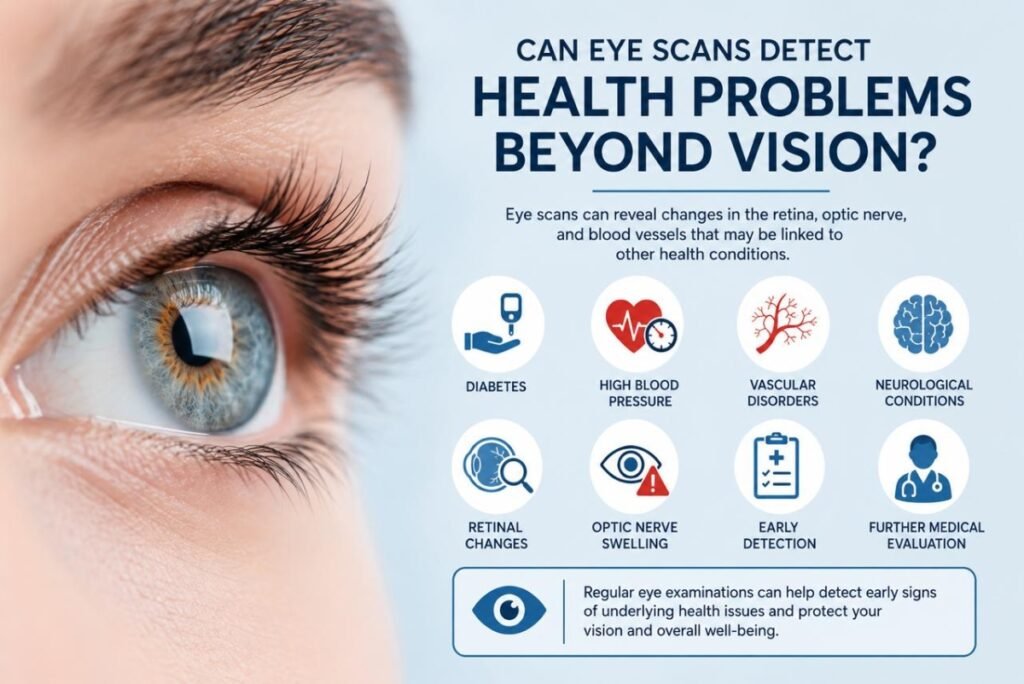
Can Eye Scans Detect Health Problems Beyond Vision?
Introduction
But my eyes seem fine. Why would I need an eye scan? This is a common question, especially when someone has no obvious vision problem. The answer is that some eye examinations and scans can reveal changes that may be associated with health conditions beyond the eyes. The retina, optic nerve, and blood vessels at the back of the eye can sometimes show signs linked to conditions such as diabetes, high blood pressure, or certain vascular and neurological problems.
However, an eye scan cannot diagnose every health condition on its own. If an eye specialist notices an unusual finding, you may be advised to undergo additional medical tests or consult another healthcare professional.
What Can an Eye Scan Actually Show?
The retina, optic nerve, and tiny blood vessels at the back of the eye can provide useful information about eye health. Depending on your symptoms and medical history, an ophthalmologist may recommend retinal imaging, OCT, or other eye tests.
If you are searching for the best eye hospital in Ahmedabad, a comprehensive eye examination can help determine which tests are appropriate for your individual eye health.
Can an Eye Test Detect Diabetes?
Yes, an eye examination can sometimes detect changes associated with diabetes, particularly diabetic retinopathy.
High blood sugar over time can damage the small blood vessels supplying the retina. An eye examination may reveal bleeding, swelling, abnormal blood vessels, or other retinal changes.
This is one reason people with diabetes are often advised to have regular eye examinations, even if their vision seems normal.
An eye examination does not replace blood sugar testing. Instead, it can help identify whether diabetes may already be affecting the eyes.
Can Eye Scans Detect High Blood Pressure?
Changes in the retinal blood vessels can sometimes be associated with high blood pressure.
During a retinal examination, an ophthalmologist may notice changes in the appearance of these vessels. Such findings may lead to a recommendation for further medical evaluation.
If you have high blood pressure, regular eye check-ups can therefore be useful for monitoring your eye health as well as detecting possible effects on the retina.
Can an Eye Scan Show Signs of Other Health Problems?
In some situations, changes involving the retina or optic nerve may be associated with other medical conditions.
For example, certain eye findings can occur with vascular disorders, inflammation, or neurological conditions. Swelling of the optic nerve may require urgent investigation because it can sometimes be associated with increased pressure around the brain or other serious conditions.
However, an unusual eye finding does not automatically mean that you have a particular disease. Your doctor will consider your symptoms, medical history, examination findings, and other test results before reaching a diagnosis.
What Symptoms Mean I Should Get My Eyes Checked?
You do not have to wait until your vision becomes very poor before seeing an eye specialist. Consider an eye examination if you experience:
- Sudden or gradual changes in vision
- Blurred or distorted vision
- New floaters or flashes of light
- Difficulty seeing at night
- Loss of part of your visual field
- Persistent eye pain or redness
- Frequent headaches associated with visual symptoms
People with diabetes, high blood pressure, a family history of eye disease, or other risk factors may also need regular eye monitoring based on their doctor’s advice.
Are Eye Scans Necessary Even If My Vision Is Normal?
Sometimes, yes.
Some eye diseases can develop with few noticeable symptoms during their early stages. A comprehensive eye examination can help detect changes before they significantly affect your vision.
The type and frequency of testing depend on your age, symptoms, medical history, risk factors, and existing eye conditions. Not everyone needs every type of eye scan.
Your ophthalmologist can recommend the appropriate examination based on your individual needs.
Can Eye Problems Be Prevented?
Not every eye condition can be prevented, but several habits can support long-term eye health.
Managing blood sugar and blood pressure, avoiding smoking, eating a balanced diet, protecting your eyes from injury and excessive sunlight, and attending recommended eye examinations can all contribute to better eye health.
If you already have diabetes or another condition that can affect the eyes, following your doctor’s treatment plan is particularly important.
When Should You See an Eye Specialist?
Seek prompt medical attention for sudden vision loss, a sudden increase in floaters, flashes of light, a curtain-like shadow over your vision, or sudden severe eye pain. These symptoms can sometimes indicate an urgent eye problem.
For routine concerns, a comprehensive eye check-up can help determine whether you need further examination or imaging.
Your Eye Health Can Tell You More Than You Think
An eye scan is primarily used to assess eye structures, but certain findings can sometimes provide clues about a person’s overall health. It should not be considered a replacement for general health screening, but it can be an important part of identifying and monitoring conditions that affect the eyes.
If you are searching for the best eye hospital in Ahmedabad, Dr. Rushil Ambani at Core Vision Eye Clinic can help you understand which eye examinations or scans may be appropriate for your symptoms and risk factors. A comprehensive evaluation can help identify eye conditions early and guide you toward the right next steps for protecting your vision and long-term eye health.