Uncategorized

Uncategorized

Can Poor Vision Be a Sign That I Need a Cornea Transplant?

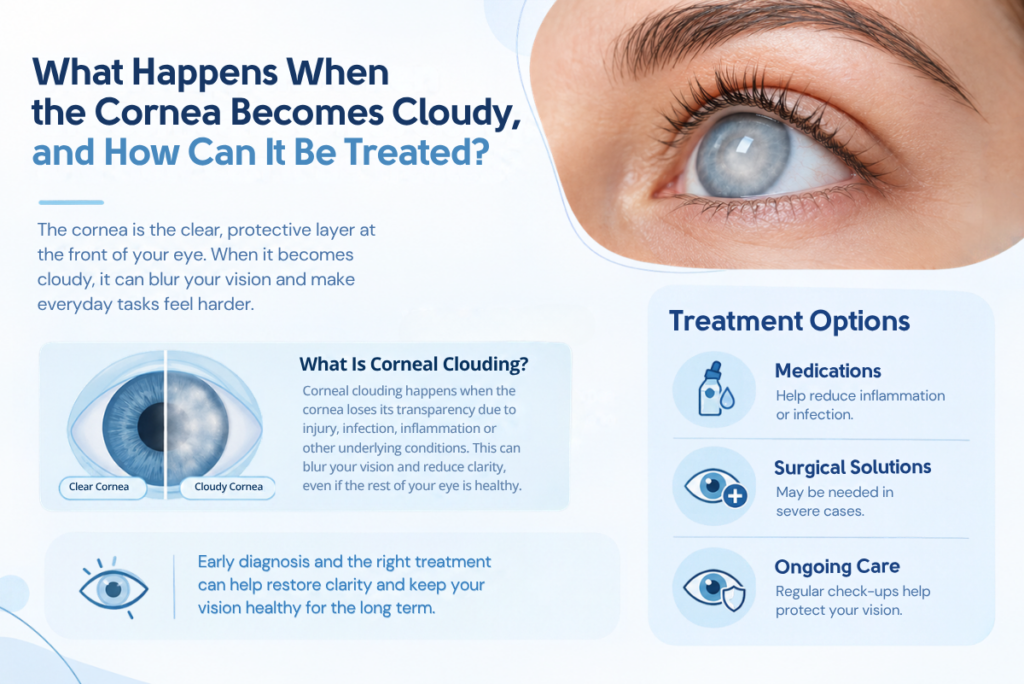
Can Poor Vision Be a Sign That I Need a Cornea Transplant? Introduction Yes, poor vision can sometimes be a sign of a corneal condition that may require a cornea transplant, but poor vision alone does not mean you need one. Blurred or reduced vision can happen because of glasses power, cataracts, glaucoma, retinal disease, dry eye, or problems with the cornea. A cornea transplant may be recommended when the cornea becomes significantly damaged, scarred, swollen, or cloudy and other treatments cannot provide enough improvement. The decision depends on what is causing the vision loss, how severe the corneal damage is, and which layer of the cornea is affected. If you are searching for the Best Hospital for Corneal Transplant in Ahmedabad, the first step is to find the actual cause of your poor vision rather than assuming surgery is necessary. How Can a Cornea Problem Affect Vision? The cornea is the clear front surface of the eye. It helps focus light so that you can see clearly. When the cornea becomes cloudy, scarred, swollen, irregular, or abnormally thin, it can affect how light enters the eye. You may experience blurred vision, distorted vision, glare, halos around lights, or difficulty seeing clearly. The symptoms can vary depending on the underlying condition and the part of the cornea involved. What Corneal Conditions Can Cause Poor Vision? Several corneal diseases can affect vision and may require transplantation in advanced cases. Keratoconus – Keratoconus causes the cornea to become thinner and bulge outward. People may notice frequent changes in glasses power, blurred or distorted vision, glare, or difficulty getting clear vision even with glasses. A cornea transplant is not automatically required. Depending on the stage, treatment may include glasses, specialty contact lenses, or corneal cross-linking. In advanced cases with significant scarring or when other options are no longer effective, transplantation may be considered. Corneal Scarring – Infections, eye injuries, inflammation, or chemical injuries can leave scars on the cornea. If a scar affects the central part of the cornea, it can interfere significantly with vision. When the damage is severe and cannot be managed adequately with other treatments, a cornea transplant may become an option. Corneal Dystrophies – Some inherited corneal conditions can gradually affect the clarity of the cornea. Depending on the specific disorder, patients may experience cloudy vision, glare, light sensitivity, or progressive loss of visual clarity. Treatment varies according to the condition and its severity. Some patients with advanced disease may require corneal transplantation. Does Poor Vision Mean I Need a Cornea Transplant? No This is one of the most important things to understand. Poor vision has many possible causes, and a cornea transplant only treats certain problems involving the cornea. Your eye specialist first needs to determine whether the cornea is responsible for your reduced vision. If cataracts, retinal disease, glaucoma, or an uncorrected refractive error is causing the problem, another treatment may be more appropriate How Is It Decided Whether You Need a Cornea Transplant? Your ophthalmologist may evaluate your visual acuity, corneal thickness, corneal shape, transparency, and the condition of different corneal layers. Depending on your symptoms, tests such as corneal topography or tomography may also be recommended. These evaluations help your doctor understand the cause of your poor vision and whether your condition can be treated without transplantation. Poor Vision Doesn’t Always Mean You Need a Cornea Transplant Poor vision does not automatically mean you need a cornea transplant. The cause may be a corneal condition, but it could also be related to another eye problem. A detailed eye and corneal evaluation is the best way to understand what is affecting your vision and whether you need glasses, contact lenses, another treatment, or corneal transplant surgery. If you are looking for the Best Hospital for Corneal Transplant in Ahmedabad, Core Vision Eye Clinic provides corneal evaluation and treatment guidance based on each patient’s individual condition. Dr. Rushil Ambani can help assess the health of your cornea, explain your treatment options, and determine whether a cornea transplant is appropriate for you.

Uncategorized

Which Type of Cornea Transplant Is Right for You? Understanding Your Options

Which Type of Cornea Transplant Is Right for You? Understanding Your Options Introduction Do I need a full cornea transplant, or can only the damaged part of my cornea be treated? This is one of the first questions patients ask after being told they may need corneal transplant surgery. The right type of cornea transplant depends on which part or layer of the cornea is damaged. If the problem affects the entire cornea, a full-thickness transplant may be needed. If only specific layers are affected, a partial-thickness procedure such as DALK, DSEK, or DMEK may be more appropriate. Your cornea specialist makes this decision after examining the health and thickness of your cornea. If you are searching for the Best Hospital for Corneal Transplant in Ahmedabad, understanding these options can help you know what your doctor may recommend. What Are the Different Types of Cornea Transplant? A cornea transplant, also called keratoplasty, replaces damaged corneal tissue with healthy donor tissue. The main types include: Penetrating Keratoplasty (PKP) – PKP is a full-thickness cornea transplant. It replaces all layers of the damaged cornea with donor tissue. This procedure may be considered when there is extensive corneal scarring or damage involving much of the cornea. Because the entire corneal thickness is replaced, recovery can take longer than with some partial-thickness procedures. Deep Anterior Lamellar Keratoplasty (DALK) – DALK replaces the front and middle layers of the cornea while preserving the patient’s healthy inner endothelial layer. It may be suitable for conditions such as keratoconus when the deeper endothelial layer is functioning well. One potential advantage is that the patient’s own endothelium remains in place, reducing the risk of endothelial rejection compared with a full-thickness transplant. DSEK or DSAEK – DSEK and DSAEK are endothelial corneal transplant procedures. They replace unhealthy inner corneal tissue rather than the entire cornea. These procedures may be considered when the corneal endothelium is not working properly. The endothelial cells help maintain the cornea’s clarity by regulating fluid within it. DMEK – DMEK is another partial-thickness endothelial transplant. It replaces the damaged Descemet’s membrane and endothelial cells with donor tissue. Because only a very thin layer is transplanted, much of the patient’s own cornea remains untouched. DMEK may be recommended for selected patients with corneal endothelial disorders, depending on the condition of the rest of the cornea. So, Which Cornea Transplant Is Best for You? There is no single best cornea transplant for every patient. The decision depends on the location and severity of corneal damage: Extensive or full-thickness damage: PKP may be Disease affecting the front or middle corneal layers with healthy endothelium: DALK may be suitable. Endothelial dysfunction: DSEK/DSAEK or DMEK may be Significant corneal scarring: A lamellar endothelial procedure may not be sufficient, and your doctor may consider PKP depending on the Your ophthalmologist may perform a detailed eye examination and corneal imaging before deciding which procedure is appropriate. What Causes Corneal Damage Requiring a Transplant? A corneal transplant may be considered for conditions such as keratoconus, corneal scarring, corneal dystrophies, previous eye surgery, serious eye infections, trauma, or problems affecting the corneal endothelium. However, having a corneal condition does not automatically mean you need a transplant. Depending on the diagnosis and severity, your doctor may recommend observation, medicines, special contact lenses, or another treatment first. When Should You See a Cornea Specialist? If you have persistent blurred vision, corneal scarring, keratoconus, swelling of the cornea, or have already been advised to consider a transplant, a cornea specialist can assess whether surgery is necessary and which type may suit your eye. For patients looking for a cornea transplant in Ahmedabad, Core Vision Eye Clinic provides evaluation and treatment planning based on the individual condition of the cornea. The Right Transplant Depends on Your Corneal Condition The right cornea transplant is the one that treats the specific layer of your cornea that is diseased while preserving as much healthy corneal tissue as possible. PKP, DALK, DSEK/DSAEK, and DMEK each have different indications, so the choice should be made after a detailed examination rather than simply choosing the procedure considered “best.” If you are considering cornea transplant surgery in Ahmedabad, consult Dr. Rushil Ambani at Core Vision Eye Clinic to understand your diagnosis, treatment options, expected recovery, and potential risks before making a decision.

Uncategorized

Is It Safe to Wear Eye Makeup with Contact Lenses?

Is It Safe to Wear Eye Makeup with Contact Lenses? Introduction Can I wear my contact lenses and still use eye makeup? This is a common question, especially for people who wear contact lenses every day. Yes, you can generally wear eye makeup with contact lenses, but proper hygiene and careful application are important. Makeup particles, contaminated products, or poor lens-handling habits can irritate the eyes and may increase the risk of eye problems. A few simple precautions can make wearing contact lenses and makeup more comfortable while helping reduce avoidable irritation. Can You Wear Makeup While Wearing Contact Lenses? Yes, you can generally wear makeup while using contact lenses, but proper hygiene and careful application are important. If you are looking for the Best Eye Hospital in Ahmedabad, Core Vision Eye Clinic can help with contact lens-related concerns and provide guidance if you experience irritation, dryness, redness, or other discomfort. Yes, but the order matters. It is generally better to put your contact lenses in before applying eye makeup. This reduces the chance of makeup getting trapped between the lens and the surface of your eye. When removing makeup, take your contact lenses out first and then remove your eye makeup. Always wash and dry your hands before handling your lenses. Avoid applying products directly to the inner eyelid or very close to the tear film, as cosmetic particles can enter the eye and cause irritation. What Eye Makeup Is Safe with Contact Lenses? Not all eye cosmetics carry the same risk of irritation. Mascara, eyeliner, eyeshadow, kajal, and other products can shed particles that may enter the eye. Waterproof or long-wearing products can also be more difficult to remove completely. If you regularly wear contact lenses: Choose eye cosmetics from reputable Avoid sharing mascara, eyeliner, or other eye Replace old eye makeup according to the manufacturer’s Keep makeup brushes and applicators Avoid using products that have changed smell, texture, or Do not add water or other liquids to dried Avoid applying eyeliner directly along the inner eyelid if it causes If a particular cosmetic repeatedly makes your eyes uncomfortable, stop using it and consider discussing the symptoms with an eye specialist. Can Eye Makeup Cause an Eye Infection? It can, particularly when makeup is contaminated or used improperly. Bacteria can accumulate on cosmetic products and applicators over time. Touching your eyes with unwashed hands or sharing eye makeup can also transfer microorganisms. Contact lenses require careful hygiene because they sit directly on the surface of the eye. Poor lens hygiene combined with contaminated cosmetics may increase the risk of irritation or infection. Persistent redness, swelling, discharge, eye pain, light sensitivity, or worsening blurred vision should not simply be assumed to be a reaction to makeup. Can You Wear Kajal or Eyeliner with Contact Lenses? You can, but where and how you apply it matters. Applying eyeliner directly along the inner edge of the eyelid may allow cosmetic particles to mix with the tear film or collect around the contact lens. This can cause dryness, irritation, or discomfort in some people. If you notice burning, watering, redness, or a gritty sensation after applying eyeliner or kajal, remove your contact lenses and makeup and give your eyes a break. What Should You Do If Your Eyes Become Red After Wearing Makeup? First, remove your contact lenses and stop using the cosmetic that may have caused the irritation. Do not continue wearing contact lenses simply because the redness seems mild. If symptoms persist or become worse, seek an eye examination. You should seek prompt professional evaluation if redness is accompanied by eye pain, discharge, increased sensitivity to light, or reduced or blurred vision. Contact lens wearers should be especially cautious about significant or worsening eye symptoms because some eye infections can become serious if treatment is delayed. How Can Contact Lens Wearers Protect Their Eyes? Good hygiene is one of the simplest ways to reduce avoidable eye problems. Always wash and dry your hands before handling contact lenses. Follow the cleaning, wearing, and replacement schedule recommended for your particular lenses. Do not sleep in contact lenses unless your eye-care professional has specifically advised that your lenses are suitable for overnight wear. Also, avoid using tap water to clean or store contact lenses. Never share your lenses with another person, and do not use someone else’s eye makeup. Regular eye examinations can also help ensure that your contact lenses remain suitable for your eyes and that problems such as dryness, irritation, or poor lens fit are identified. When Should You See an Eye Specialist? Occasional mild irritation may improve after removing your contact lenses and makeup. However, persistent redness, eye pain, discharge, sudden blurred vision, increased sensitivity to light, or worsening symptoms require professional evaluation. If you frequently experience dry, red, or uncomfortable eyes while wearing contact lenses, an eye examination can help determine whether the problem is related to lens fit, dry eyes, allergies, cosmetics, or another eye condition. Protecting Your Eyes While Wearing Makeup and Contact Lenses Wearing eye makeup does not automatically mean you have to stop using contact lenses. The key is to maintain good hygiene, handle your lenses correctly, use eye cosmetics carefully, and pay attention to changes in your eyes. If you are looking for the Best Eye Hospital in Ahmedabad, Dr. Rushil Ambani at Core Vision Eye Clinic can help assess persistent eye irritation, contact-lens-related discomfort, or other eye concerns. A proper eye examination can help identify the possible cause of your symptoms and guide you toward appropriate eye-care and contact lens practices.

Uncategorized

Can Eye Scans Detect Health Problems Beyond Vision?

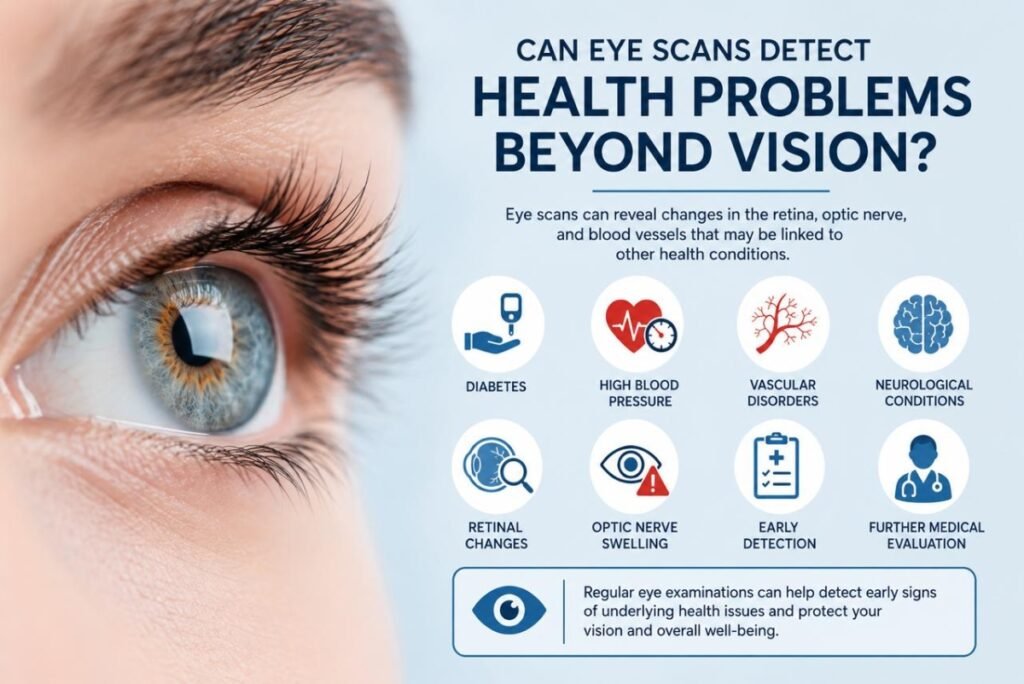
Can Eye Scans Detect Health Problems Beyond Vision? Introduction But my eyes seem fine. Why would I need an eye scan? This is a common question, especially when someone has no obvious vision problem. The answer is that some eye examinations and scans can reveal changes that may be associated with health conditions beyond the eyes. The retina, optic nerve, and blood vessels at the back of the eye can sometimes show signs linked to conditions such as diabetes, high blood pressure, or certain vascular and neurological problems. However, an eye scan cannot diagnose every health condition on its own. If an eye specialist notices an unusual finding, you may be advised to undergo additional medical tests or consult another healthcare professional. What Can an Eye Scan Actually Show? The retina, optic nerve, and tiny blood vessels at the back of the eye can provide useful information about eye health. Depending on your symptoms and medical history, an ophthalmologist may recommend retinal imaging, OCT, or other eye tests. If you are searching for the best eye hospital in Ahmedabad, a comprehensive eye examination can help determine which tests are appropriate for your individual eye health. Can an Eye Test Detect Diabetes? Yes, an eye examination can sometimes detect changes associated with diabetes, particularly diabetic retinopathy. High blood sugar over time can damage the small blood vessels supplying the retina. An eye examination may reveal bleeding, swelling, abnormal blood vessels, or other retinal changes. This is one reason people with diabetes are often advised to have regular eye examinations, even if their vision seems normal. An eye examination does not replace blood sugar testing. Instead, it can help identify whether diabetes may already be affecting the eyes. Can Eye Scans Detect High Blood Pressure? Changes in the retinal blood vessels can sometimes be associated with high blood pressure. During a retinal examination, an ophthalmologist may notice changes in the appearance of these vessels. Such findings may lead to a recommendation for further medical evaluation. If you have high blood pressure, regular eye check-ups can therefore be useful for monitoring your eye health as well as detecting possible effects on the retina. Can an Eye Scan Show Signs of Other Health Problems? In some situations, changes involving the retina or optic nerve may be associated with other medical conditions. For example, certain eye findings can occur with vascular disorders, inflammation, or neurological conditions. Swelling of the optic nerve may require urgent investigation because it can sometimes be associated with increased pressure around the brain or other serious conditions. However, an unusual eye finding does not automatically mean that you have a particular disease. Your doctor will consider your symptoms, medical history, examination findings, and other test results before reaching a diagnosis. What Symptoms Mean I Should Get My Eyes Checked? You do not have to wait until your vision becomes very poor before seeing an eye specialist. Consider an eye examination if you experience: Sudden or gradual changes in vision Blurred or distorted vision New floaters or flashes of light Difficulty seeing at night Loss of part of your visual field Persistent eye pain or redness Frequent headaches associated with visual symptoms People with diabetes, high blood pressure, a family history of eye disease, or other risk factors may also need regular eye monitoring based on their doctor’s advice. Are Eye Scans Necessary Even If My Vision Is Normal? Sometimes, yes. Some eye diseases can develop with few noticeable symptoms during their early stages. A comprehensive eye examination can help detect changes before they significantly affect your vision. The type and frequency of testing depend on your age, symptoms, medical history, risk factors, and existing eye conditions. Not everyone needs every type of eye scan. Your ophthalmologist can recommend the appropriate examination based on your individual needs. Can Eye Problems Be Prevented? Not every eye condition can be prevented, but several habits can support long-term eye health. Managing blood sugar and blood pressure, avoiding smoking, eating a balanced diet, protecting your eyes from injury and excessive sunlight, and attending recommended eye examinations can all contribute to better eye health. If you already have diabetes or another condition that can affect the eyes, following your doctor’s treatment plan is particularly important. When Should You See an Eye Specialist? Seek prompt medical attention for sudden vision loss, a sudden increase in floaters, flashes of light, a curtain-like shadow over your vision, or sudden severe eye pain. These symptoms can sometimes indicate an urgent eye problem. For routine concerns, a comprehensive eye check-up can help determine whether you need further examination or imaging. Your Eye Health Can Tell You More Than You Think An eye scan is primarily used to assess eye structures, but certain findings can sometimes provide clues about a person’s overall health. It should not be considered a replacement for general health screening, but it can be an important part of identifying and monitoring conditions that affect the eyes. If you are searching for the best eye hospital in Ahmedabad, Dr. Rushil Ambani at Core Vision Eye Clinic can help you understand which eye examinations or scans may be appropriate for your symptoms and risk factors. A comprehensive evaluation can help identify eye conditions early and guide you toward the right next steps for protecting your vision and long-term eye health.

Uncategorized

What Are the Most Common Eye Problems People Face Today?

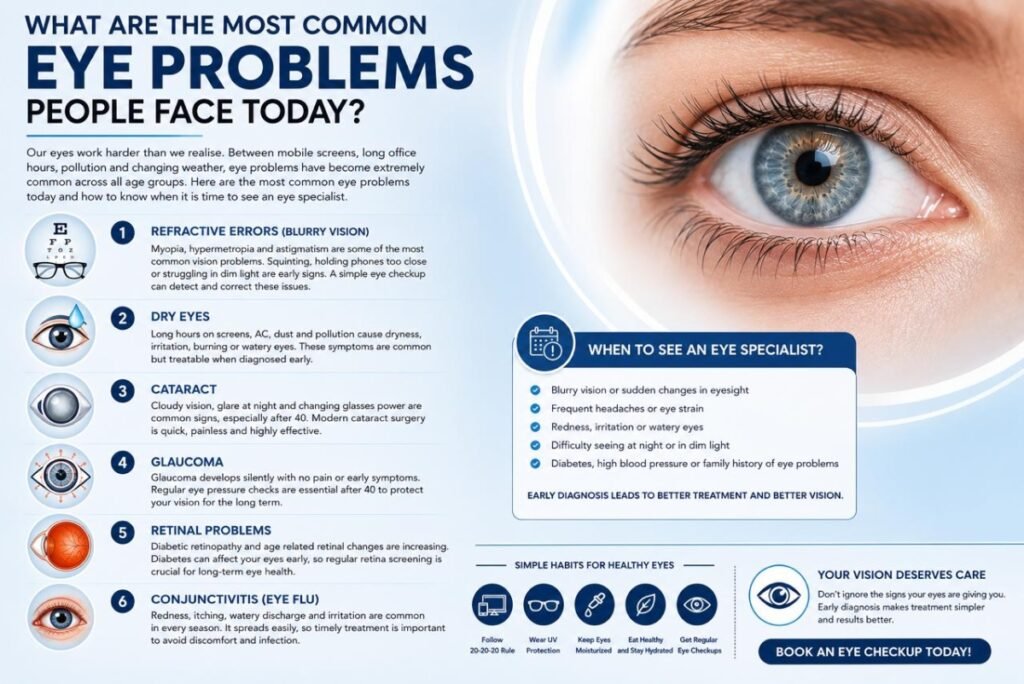
What Are the Most Common Eye Problems People Face Today? Introduction Our eyes work harder than we realise. Between mobile screens, long office hours, pollution and changing weather, eye problems have become extremely common across all age groups. At Core Vision Eye Clinic,we meet patients every day whose vision feels weak, tired or blurry without any clear reason. In this blog, Dr. Rushil Ambani explains the most common eye problems today and how to know when it is time to see an eye specialist. 1.  Refractive Errors (Blurry Vision) – Myopia, hypermetropia and astigmatism are some of the most common vision problems around us. Squinting to read a signboard, holding yourphone too close or straining to focus in dim light are early signs that your eyes need attention. A simple eye checkup at a trusted eye hospital in Ahmedabad can catch these issues early and correct them with the right glasses or lenses. 2.  Dry Eyes – Long hours on laptops, constant air conditioning and dust exposure leave many eyes dry, irritated and uncomfortable by evening. Burning, itching or watery eyes are not something to ignore, especially if they show up every single day. Dry eye treatment is straightforward when caught early, and a quick consultation can bring real relief. 3.  Cataract – Cataract remains one of the leading causes of reduced vision in people above 40. Cloudy vision, difficulty seeing at night and frequent changes in glasses power are the usual warning signs. Cataract surgery in Ahmedabad has become quick and painless today, and Dr. Rushil Ambani has guided thousands of patients through smooth recovery with clear vision restored within days. 4.  Glaucoma – Glaucoma often develops silently, with no pain or obvious symptoms until vision is already affected. This is exactly why a routine eye pressure check matters, particularly for anyone crossing 40. Catching glaucoma early is the single best way to protect your eyesight for the long run. 5.  Retinal Problems – Diabetic retinopathy and age related retinal changes are becoming more common as diabetes and lifestyle related issues rise. Diabetes can quietly affect the eyes long before it affects vision noticeably, which makes regular retina screening at a trusted eye clinic so important for anyone managing blood sugar levels. 6.  Conjunctivitis (Eye Flu) – Every season brings a rise in redness, itching and watery discharge, commonly known as eye flu. It spreads fast and can affect entire families or workplaces within days, so eye flu treatment should never be delayed once symptoms appear. Why Choose Core Vision Eye Clinic Located in Ahmedabad, Core Vision Eye Clinic and known for accurate diagnosis, advanced technology and genuinely caring treatment. Under Dr. Rushil Ambani, the clinic has successfully completed 4000 eye surgeries, helping patients across Ahmedabad regain clear and confident vision. Whether it is a routine eye checkup, LASIK surgery in Ahmedabad or cataract treatment, the team is here to guide every patient with care at every step. Ignore it today, regret it tomorrow Blurry vision, frequent headaches, eye strain, redness or sudden changes in eyesight are signals your eyes are asking for help. Early diagnosis almost always makes treatment simpler and outcomes better. Book an appointment with the best eye hospital in Ahmedabad today and take the first real step towards healthier eyes. Your vision deserves expert care. Visit Core Vision Eye Clinic and Surgery and consult Dr. Rushil Ambani for a complete eye examination.

Uncategorized

Is LASIK Surgery Dangerous? Risks, Side Effects, and What to Expect

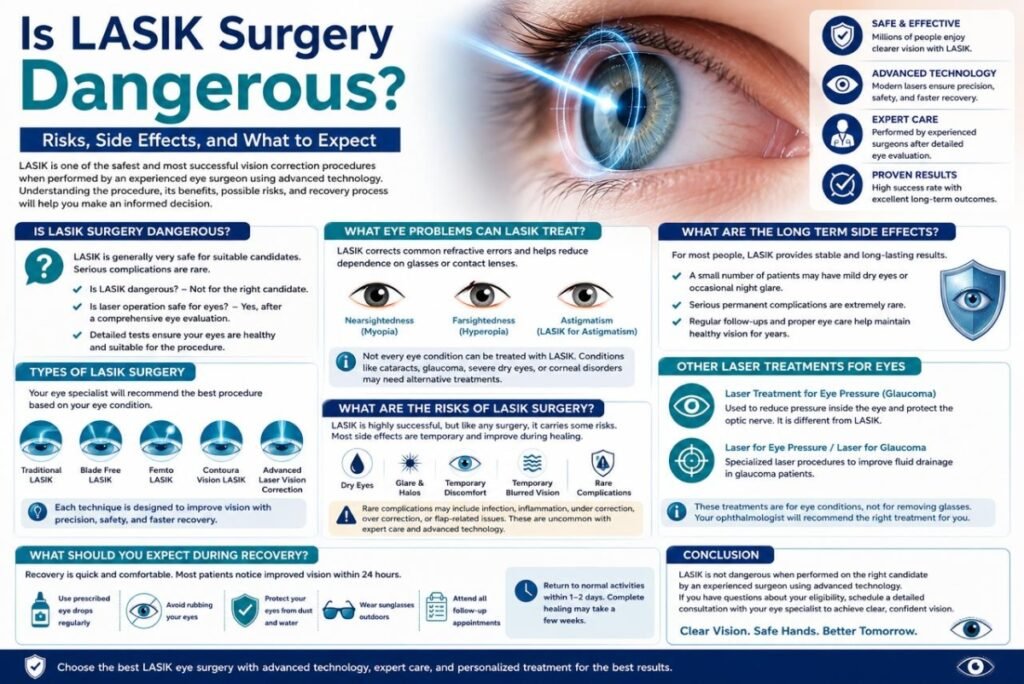
Is LASIK Surgery Dangerous? Risks, Side Effects, and What to Expect Introduction If you are searching for the best lasik eye surgery in Ahmedabad, it is natural to wonder whether LASIK is truly safe. Many people hesitate because they have heard different opinions online or from friends. The truth is that LASIK has helped millions of people enjoy clearer vision with reduced dependence on glasses and contact lenses. When performed by an experienced eye surgeon like Dr. Rushil Ambani using advanced technology and after a detailed eye examination, LASIK is considered one of the safest and most successful vision correction procedures available today. Understanding the procedure, its benefits, possible risks, and recovery process will help you make an informed decision. Is LASIK Surgery Dangerous? One of the most common questions patients ask is ” is lasik dangerous ?” The answer is that LASIK is generally very safe for people who are suitable candidates. Like every medical procedure, there are some risks, but serious complications are uncommon. Modern laser technology has significantly improved the safety, accuracy, and success rate of LASIK surgery. Many people also ask, ” is laser operation safe for eyes ?” The answer depends on your eye health. Before recommending LASIK, your eye specialist carefully checks your corneal thickness, eye power, tear production, and overall eye condition. This detailed evaluation ensures that the procedure is safe and suitable for you. Understanding the Types of LASIK Surgery There are different types of lasik surgery, and your ophthalmologist will recommend the one that best matches your eye condition. These include traditional LASIK, Blade Free LASIK, Femto LASIK, Contoura Vision LASIK, and other advanced laser vision correction procedures. Each technique is designed to improve vision while offering excellent precision and faster recovery. Choosing the right procedure depends on your eye health, prescription, lifestyle, and expectations. What Eye Problems Can LASIK Treat? LASIK is designed to correct common refractive errors such as nearsightedness, farsightedness, and lasik for astigmatism. Many people who struggle with blurred vision because of astigmatism achieve excellent results after treatment. However, not every eye condition can be corrected with LASIK. Different laser eye surgery conditions require different treatments. Some patients with cataracts, glaucoma, severe dry eyes, or corneal disorders may need alternative procedures instead of LASIK. A comprehensive consultation with Dr. Rushil Ambani helps determine the most suitable option for your vision. What Are the Risks of LASIK Surgery? Although LASIK is highly successful, patients should understand the possible lasik surgery risks before undergoing treatment. The most common lasik eye surgery risks include temporary dry eyes, glare around lights, halos during night driving, mild discomfort, and temporary fluctuations in vision. These symptoms usually improve as the eyes heal over the following weeks. Rare complications may include infection, inflammation, under correction, over correction, or flap related issues. Fortunately, these complications are uncommon when surgery is performed by an experienced specialist using advanced technology. Understanding these lasik surgery complications helps patients develop realistic expectations and reduces unnecessary anxiety before the procedure. What Are the Long Term Side Effects? Many patients search online for information about lasik side effects long term because they want reassurance before surgery. For most people, LASIK provides stable and long lasting vision correction. A small percentage of patients may continue to experience mild dry eyes or occasional night glare, but these symptoms are usually manageable with proper treatment. When discussing laser eye surgery side effects long term, it is important to remember that serious permanent complications are extremely rare. Regular follow up visits and proper eye care help maintain healthy vision for years. Is Laser Treatment for Eyes Good or Bad? A common online question is whether laser treatment for eyes is good or bad. The answer depends entirely on selecting the right patient. LASIK is not recommended for everyone. Patients with unstable vision, thin corneas, severe dry eye disease, or certain eye disorders may require another form of treatment. This is why choosing the best eye hospital in Ahmedabad is important. A trusted eye hospital performs detailed diagnostic testing before recommending surgery, ensuring that only suitable candidates undergo LASIK. What About Laser Treatment for Eye Pressure? Many people confuse LASIK with glaucoma laser procedures. It is important to understand that they are completely different treatments. Laser treatment for eye pressure is used to help reduce pressure inside the eye for patients with glaucoma. Similarly, laser for eye pressure is not performed to remove glasses but to protect the optic nerve from damage. Patients diagnosed with glaucoma may require laser for glaucoma, which is a specialized treatment designed to improve fluid drainage inside the eye. It is entirely different from LASIK vision correction surgery. Your ophthalmologist will recommend the appropriate laser treatment based on your diagnosis. What Should You Expect During Recovery? Recovery after LASIK is usually quick and comfortable. Most patients notice improved vision within twenty four hours, although complete healing may take a few weeks. Following your surgeon’s instructions plays a major role in achieving the best outcome. You should use prescribed eye drops regularly, avoid rubbing your eyes, protect your eyes from dust and water, wear sunglasses outdoors, and attend every follow up appointment. Most patients return to their normal daily routine within one or two days. Conclusion LASIK is not a dangerous procedure when performed on the right candidate by an experienced eye surgeon using advanced technology. While every surgery has some level of risk, the chances of serious complications are very low with proper evaluation and expert care. If you have questions about your eligibility, the safest approach is to schedule a detailed consultation with Dr. Rushil Ambani, who can assess your eye health and recommend the most suitable treatment for your vision needs. If you are looking for the best lasik eye surgery in Ahmedabad, choosing an experienced specialist, advanced technology, and personalized care will help you achieve clear vision with confidence.

Uncategorized

What Are the Early Symptoms of a Fungal Eye Infection?

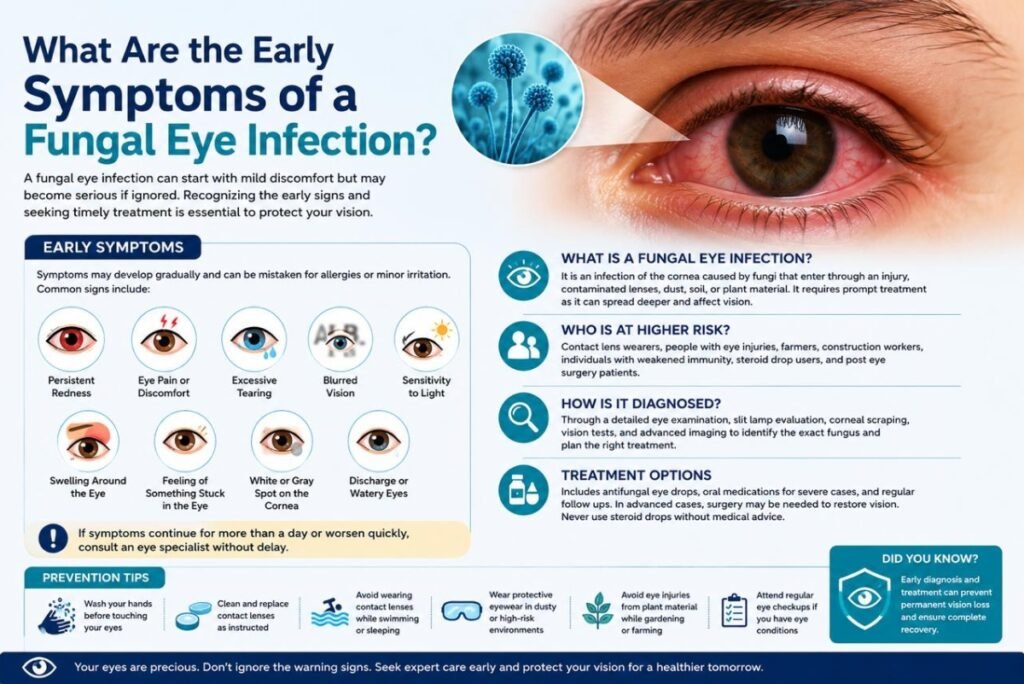
What Are the Early Symptoms of a Fungal Eye Infection? Introduction Healthy eyes are essential for everyday life, but infections can sometimes develop without obvious warning signs. Among them, a fungal eye infection is uncommon but can become a serious condition if not treated promptly. Many people mistake the early symptoms for allergies or a minor eye irritation, which delays proper treatment. If you experience persistent redness, pain, blurred vision, or discomfort, it is important to seek medical attention immediately. Choosing the best eye hospital in Ahmedabad ensures you receive an accurate diagnosis and advanced treatment from experienced specialists like Dr. Rushil Ambani, helping protect your vision before the infection becomes severe. What Is a Fungal Eye Infection? A fungal eye infection is an infection of the eye caused by fungi that enter the cornea through an injury, contaminated contact lenses, plant material, or exposure to dust and soil. This condition is medically known as fungal keratitis and requires immediate medical attention because fungi can spread deeper into the cornea if left untreated. Although fungal infections are less common than bacterial or viral infections, they are often more difficult to treat. Early diagnosis significantly improves the chances of complete recovery and helps prevent permanent vision loss What Are the Early Symptoms of a Fungal Eye Infection? The symptoms may develop gradually and can easily be mistaken for other eye conditions. Recognizing the warning signs early is the key to protecting your eyesight. Some of the most common fungal eye infection symptoms include persistent eye redness, moderate to severe eye pain, excessive tearing, blurred vision, sensitivity to light, swelling around the eye, and the feeling that something is stuck inside your eye. Some patients also notice a white or gray spot on the cornea, which should never be ignored. If these symptoms continue for more than a day or worsen quickly, consult an eye specialist without delay. Can a Cold Cause Eye Pain? Many people experience common cold eye pain while suffering from a viral infection. Sinus congestion and inflammation can create pressure around the eyes, making them feel sore or heavy. Similarly, eye pain due to cold is usually temporary and improves as the cold resolves. However, if the pain is severe, is associated with redness, blurred vision, or discharge, it may indicate a different problem such as a fungal or bacterial infection rather than a simple cold. A proper eye examination is the only way to identify the exact cause. Who Is at Higher Risk? Certain individuals have a greater chance of developing a fungal eye infection. These include people who wear contact lenses for long hours, individuals with eye injuries caused by farming or gardening, construction workers exposed to dust, people with weakened immunity, and those using steroid eye drops without medical advice. Patients who have recently undergone eye surgery should also be cautious and report any unusual symptoms immediately. If you are considering vision correction procedures, choosing the best lasik eye surgery in Ahmedabad ensures your eyes are carefully evaluated before treatment, reducing the risk of complications and maintaining overall eye health. How Is a Fungal Eye Infection Diagnosed? Diagnosis begins with a detailed eye examination by an experienced ophthalmologist. Dr. Rushil Ambani carefully evaluates the cornea using advanced diagnostic equipment and may recommend laboratory testing if required. Diagnostic procedures may include a slit lamp examination, corneal scraping, vision assessment, and specialized imaging. Identifying the exact fungus helps determine the most effective treatment plan. What Is the Treatment for a Fungal Eye Infection? Early fungal eye infection treatment is essential because delayed treatment can permanently affect vision. Treatment usually includes prescription antifungal eye drops, oral antifungal medications in severe cases, and regular follow up examinations to monitor healing. Patients should never use over the counter steroid eye drops without medical advice, as they may worsen the infection. In advanced situations where the cornea is severely damaged, surgery may be necessary to restore vision. Can Fungus Affect the Skin Around the Eyes? Yes. In some cases, a fungal infection around eyes may affect the skin surrounding the eyelids rather than the eye itself. Symptoms may include redness, itching, flaky skin, swelling, or irritation around the eyelids. Although this condition is different from fungal keratitis, both require medical evaluation because the infection can spread if ignored. How Can You Prevent a Fungal Eye Infection? Simple precautions can greatly reduce your risk. Always wash your hands before touching your eyes. Clean and replace contact lenses as instructed. Avoid wearing contact lenses while swimming or sleeping. Wear protective eyewear while gardening, farming, or working in dusty environments. Never ignore an eye injury caused by plant material because it increases the risk of fungus in eye infections. Attend regular eye checkups if you wear contact lenses or have underlying eye conditions. Conclusion A fungal eye infection should never be ignored, even if the symptoms seem mild at first. Early signs such as persistent redness, eye pain, blurred vision, excessive tearing, and sensitivity to light can quickly worsen if left untreated. Seeking timely medical care can help prevent serious complications and protect your long term vision. If you notice any unusual changes in your eyes, consult Dr. Rushil Ambani for a thorough eye examination and personalized treatment. With advanced diagnostic technology, expert care, and a patient focused approach, choosing the best eye hospital in Ahmedabad ensures you receive the right treatment at the right time, helping you maintain healthy vision and overall eye wellness.

Uncategorized

Eye Floaters Treatment Options When Should You Actually See a Doctor

Eye Floaters Treatment Options When Should You Actually See a Doctor Introduction When you start noticing tiny specks, strings, or shadowy shapes drifting across your vision, it is easy to dismiss them as tiredness or screen fatigue. However, these visual disturbances are often a sign of eye floaters, a condition that affects a large number of people visiting our Eye Hospital in Ahmedabad every month. In case you have been experiencing floaters treatment options and wondering whether your symptoms require medical attention, it is always better to get a proper eye examination done rather than waiting for the condition to worsen on its own. Eye floaters appear as small dots, cobweb shapes, or thread-like strands that float and shift every time your eyes move. Although floaters are often harmless, there are certain situations where eye floaters treatment becomes necessary to protect your vision. Understanding when to seek help and what floaters treatment options are available can make a significant difference to your long term eye health. Eye Floaters Treatment Options and When to See a Doctor Eye floaters treatment options vary depending on the cause and severity of the condition. At CoreVisionEye, Dr. Rushil Ambani evaluates each patient carefully before recommending any floaters treatment to ensure the safest and most effective outcome. Observation and monitoring as a floaters treatment option –  For mild and stable floaters that have been present for a long time without any change, observation is the most commonly recommended floaters treatment option. The brain gradually learns to ignore harmless floaters over time and they tend to settle below the line of vision on their own. Regular eye checkups at a trusted Eye Hospital in Ahmedabad are advised to ensure the floaters remain stable and do not indicate any underlying retinal problem. Does eye flu spread by eye contact and can it worsen floaters – Many patients who visit CoreVisionEye ask does eye flu spread by eye contact and whether it can make their floaters worse. Eye flu, which is viral conjunctivitis, does spread through direct contact with infected eye discharge or by touching contaminated surfaces and then touching the eyes. In some cases the inflammation caused by eye flu can temporarily increase visual disturbances including floaters, making it important to treat the infection promptly and completely. YAG laser vitreolysis as an eye floaters treatment option – For patients with large, dense floaters that are significantly affecting their daily vision and quality of life, YAG laser vitreolysis is an advanced eye floaters treatment option available at specialised eye clinics. In this procedure a focused laser beam is used to break up the floater into smaller fragments that are less noticeable. It is a non-surgical outpatient procedure that is performed within the clinic itself without any incisions or hospitalisation. When eye floaters treatment becomes an emergency – A sudden increase in floaters, bright flashes of light appearing alongside the dark spot in eye, or a shadow spreading across part of the vision are signs of a retinal tear or detachment that require immediate emergency eye floaters treatment. This is not a situation to observe or wait on. Visiting an experienced retina specialist at CoreVisionEye at the earliest is essential to prevent permanent vision loss in such cases. Laser eye treatment and its connection to floaters – Patients with high myopia who also experience floaters often ask about laser eye treatment options and the eye laser treatment cost in Ahmedabad. At CoreVisionEye, Dr. Rushil Ambani assesses both conditions together during the consultation and explains whether laser refractive surgery is suitable alongside floaters treatment. The eye laser treatment cost is discussed transparently so patients can plan their treatment without any confusion or hidden charges. Conclusion Eye floaters treatment options range from simple observation to advanced laser procedures depending on what is causing the floaters and how severely they are affecting your vision. Therefore, the most important step any patient can take is to visit a qualified eye specialist who can examine the eyes thoroughly and recommend the right floaters treatment at the right time. Dr. Rushil Ambani at CoreVisionEye, a trusted Eye Hospital in Ahmedabad, is always available to guide you toward the safest and most effective eye floaters treatment option for your specific condition.

Uncategorized

Is That Black Dot in Eye a Sign You Need Laser Eye Treatment?

Is That Black Dot in Eye a Sign You Need Laser Eye Treatment? Introduction When you start seeing a small black dot in eye drifting across your vision, it is natural to feel concerned. Such symptoms are not always something to ignore, as they can sometimes point to a deeper problem with your eyes. In case you notice a dark spot in eye appearing suddenly or growing in number, it is important to visit a laser eye specialist in Ahmedabad. It is often seen that a black dot in eye is connected with changes inside the vitreous gel of the eye or with an uncorrected refractive error that has gone unaddressed for a long time. A dark spot in eye or a small black dot in eye may appear as a floating speck, a shadow, or a tiny dot that moves when your eyes move. Although many people experience a black spot in eye as a part of normal aging, there are several other conditions that may cause these symptoms, including refractive errors, retinal changes, and eye inflammation. Understanding the cause of a black dot in eye is essential so that the right treatment can be sought at the right time. Various Reasons That Cause a Black Dot in Eye A black dot in eye or dark spot in eye is a common visual complaint seen across all age groups. Understanding what causes these symptoms helps in deciding when medical attention and laser eye treatment are actually needed. Age-related changes inside the eye With age, the vitreous gel inside the eye begins to shrink and liquefy. This process causes tiny protein fibres to clump together and drift through the fluid, casting small shadows on the retina. Patients often describe this as a black dot in eye or a dark spot in eye that floats and shifts with eye movement. Uncorrected refractive errors Many patients who visit a laser eye specialist with a complaint of a dark spot in eye are actually experiencing the effects of myopia, hyperopia, or astigmatism that has worsened over time. When the cornea is not focusing light correctly on the retina, the brain perceives shadowy patches or a recurring black spot in eye. In such cases, laser eye treatment is often the most effective and permanent solution available. Importance of timely laser eye evaluation In case you notice a black dot in eye that is new, increasing in number, or accompanied by flashes of light, it is important to seek a consultation with an experienced eye specialist immediately. It is vital to rule out any serious retinal condition before it affects your vision permanently. Visiting a trusted Eye Hospital in Ahmedabad ensures you receive a thorough evaluation and the most appropriate treatment for your eyes. Retinal tears and detachment A sudden increase in black dots or a dark spot in eye accompanied by flashing lights can be a sign of a retinal tear or retinal detachment. This condition is a medical emergency and requires prompt attention. It is essential to recognise that delaying treatment in such cases can lead to permanent vision loss. Laser eye treatment as a solution Advanced laser technology available at modern eye clinics can correct the refractive errors that contribute to a dark spot in eye or blurred patches in vision. The eye laser treatment cost in Ahmedabad depends on the procedure recommended — LASIK, SMILE, or PRK — and the individual eye profile of the patient. Choosing the right laser eye specialist in Ahmedabad ensures a thorough suitability assessment and a safe, personalised treatment plan. Conclusion A black dot in eye can be a natural part of aging, but it can sometimes indicate a refractive error or a more serious retinal condition that requires timely medical care. Therefore, it is always a good idea to consult an eye specialist if you notice any new or changing dark spot in eye. Dr. Rushil Ambani at CoreVisionEye, a trusted Eye Hospital in Ahmedabad, will examine your eyes thoroughly and guide you toward the safest laser eye treatment available for your specific condition.

Uncategorized

Common Eye Problems People Ignore Until It Is Too Late

Common Eye Problems People Ignore Until It Is Too Late Introduction We use our eyes every single minute of every day, yet eye health is one of the most neglected parts of our overall wellbeing. Most people visit a doctor only when their vision has already become significantly worse. By that time, what could have been a simple treatment has often turned into a complex and costly procedure. The reality is that many serious eye conditions start with symptoms so mild that people brush them off completely. Understanding these warning signs early and visiting the right eye hospital in Ahmedabad at the right time can genuinely save your vision for life. Let us look at the most common eye problems people ignore and why ignoring them is never a good idea. 1.  Gradual Blurring of Vision : This is perhaps the most ignored eye symptom of all. People assume blurry vision is just tiredness or too much screen time. While that can sometimes be true, persistent blurry vision is often an early sign of conditions like keratoconus, cataract, glaucoma, or even corneal disease. If your vision has been progressively blurring over weeks or months, it is time to book a comprehensive eye check up in Ahmedabad immediately. Early detection always leads to simpler and more affordable treatment. 2.  Frequent Changes in Glasses Prescription : If you find yourself changing your glasses or contact lens prescription every few months, do not take it lightly. This is a classic early warning sign of keratoconus treatment needs or other progressive corneal conditions. A sudden or frequent change in prescription is your eye’s way of telling you something is changing inside. Visit a qualified eye specialist in Ahmedabad as soon as possible for a detailed corneal evaluation. 3.  Redness and Irritation That Won’t Go Away : Occasional redness is normal. But if your eyes are constantly red, irritated, watery, or uncomfortable, it could be a sign of corneal infection treatment needs, dry eye disease, uveitis, or early glaucoma treatment requirements. Prolonged redness is never something to ignore. A visit to a trusted eye care hospital in Ahmedabad can help identify the root cause and prevent the condition from progressing into something more serious. 4.  Sensitivity to Light and Glare : Increased sensitivity to light, especially while driving at night or in bright sunlight, is a symptom many people put up with for years without seeking help. This can be an early sign of corneal dystrophy treatment needs, cataract surgery requirements, or posterior corneal disease. An experienced ophthalmologist in Ahmedabad can diagnose the exact cause through a detailed slit lamp examination and recommend the right treatment plan before permanent damage occurs. 5.  Seeing Halos Around Lights : Noticing coloured rings or halos around lights especially at night is a symptom that should never be dismissed. It is one of the most common early signs of glaucoma treatment needs or developing cataracts that require cataract surgery in Ahmedabad. Glaucoma is often called the silent thief of sight because it causes irreversible vision loss without significant pain. By the time halos become noticeable, damage to the optic nerve may already be underway. 6.  Sudden Floaters or Flashes of Light : Seeing sudden floaters, such as small spots or threads drifting across your vision, or flashes of light is a symptom that demands immediate attention. This could indicate retinal detachment treatment needs or serious vitreoretinal disease. This is a true eye emergency. If you experience sudden floaters or flashes, visit an eye treatment hospital in Ahmedabad the same day. Delay in treatment can result in permanent and irreversible vision loss. 7.  Eye Pain or Pressure : Persistent eye pain or a feeling of pressure inside the eye is something people often mistake for a headache or sinus issue. However, it can be a serious sign of acute glaucoma surgery requirements or severe ocular trauma treatment needs. Any unexplained eye pain lasting more than 24 hours should be evaluated by a best eye doctor in Ahmedabad without delay. This is not a symptom to sleep on or manage with painkillers at home. 8.  Cloudy or Foggy Vision in the Morning : If your vision is consistently foggy or cloudy when you wake up and slowly clears as the day goes on, this pattern could indicate Fuchs dystrophy treatment needs or early corneal edema. Left untreated, this condition progresses to the point where a corneal transplant surgery in Ahmedabad becomes the only solution. Morning foggy vision is one of those symptoms that seems harmless at first but quietly worsens over months and years. Final Thoughts Your eyes are irreplaceable and every single symptom mentioned above has one thing in common early treatment makes everything simpler, safer, and more effective. Do not wait for your vision to become a crisis before you seek help. At CoreVisionEye, Dr. Rushil Ambani is a highly experienced and trusted specialist offering complete eye care under one roof. From routine eye check up in Ahmedabad to advanced corneal transplant surgery, the team at CoreVisionEye is equipped with modern technology and genuine expertise to handle every eye condition with precision and care. If you have been ignoring any of these symptoms, today is the right day to book your appointment at CoreVisionEye and take the first step towards protecting your vision for life.

Scroll to Top